A faster web app: pages now arrive ready to use
We rebuilt the Mozart web app so pages are rendered on our servers. Navigation, the Library, Credits and song pages load faster.
By Mozart Team3 min read
On 10 November 2026 a rebuilt Mozart web app reached production, and the rollout was finished by 18 November. Nothing was added to the menus and nothing moved. The change is that pages arrive faster.
What it is
Before this release, the Mozart web app worked the way many web apps do. Your browser downloaded the application, started it, asked our servers for your data, and only then drew the page. On a fast laptop that was a short wait. On a phone with a weak connection it was a long one.
The rebuilt app does that work on our servers. When you ask for a page, the server gathers what the page needs, renders it, and sends your browser a page that is already complete. The app then starts up behind it, so buttons and players respond.
What you will notice
- Navigation is quicker. Moving between pages no longer waits for the whole app to start.
- The Library, the Credits page and song pages load faster.
- Shared links open faster for people who are not signed in. A song, album, video, Persona or profile arrives as a finished page, and search engines and link previews see that same page.
- Phones and computers each get the layout made for them straight away.
Opening a project is the remaining slow path. A project needs its audio and the audio engine before it can play, and that work still happens in your browser. We are working on it.
How it works
Three decisions did most of the work:
- Render on the server. Public pages and signed-in pages are both rendered before they reach you. Every request gets its own data, so one person's page is never mixed with another's.
- Cache what can be shared. A public page, such as a published song, is the same for everyone. Copies are kept close to visitors around the world and served without waiting for our servers. Pages that depend on who you are never go into that shared cache.
- Send less code. The audio engine no longer loads on public pages. It loads where it is needed, in the places you create and edit.
The first point has a test of its own. It renders pages for two different people at the same moment and checks that each one gets their own songs.
Who it is for
This release is for everyone who uses Mozart in a browser. It matters most to people on phones, people on slow connections, and people opening a link that a friend sent them. For that last group, the first page they see is often their first impression of Mozart, and it should not be a loading spinner.
What came next
- On 12 November 2026, phone browsers got a new full-screen player. Tapping the mini player opens it, and swiping the cover moves to the next or previous song.
- On 18 November 2026, every Library tab gained filters and sorts, and tabs began to switch the moment you tap them.
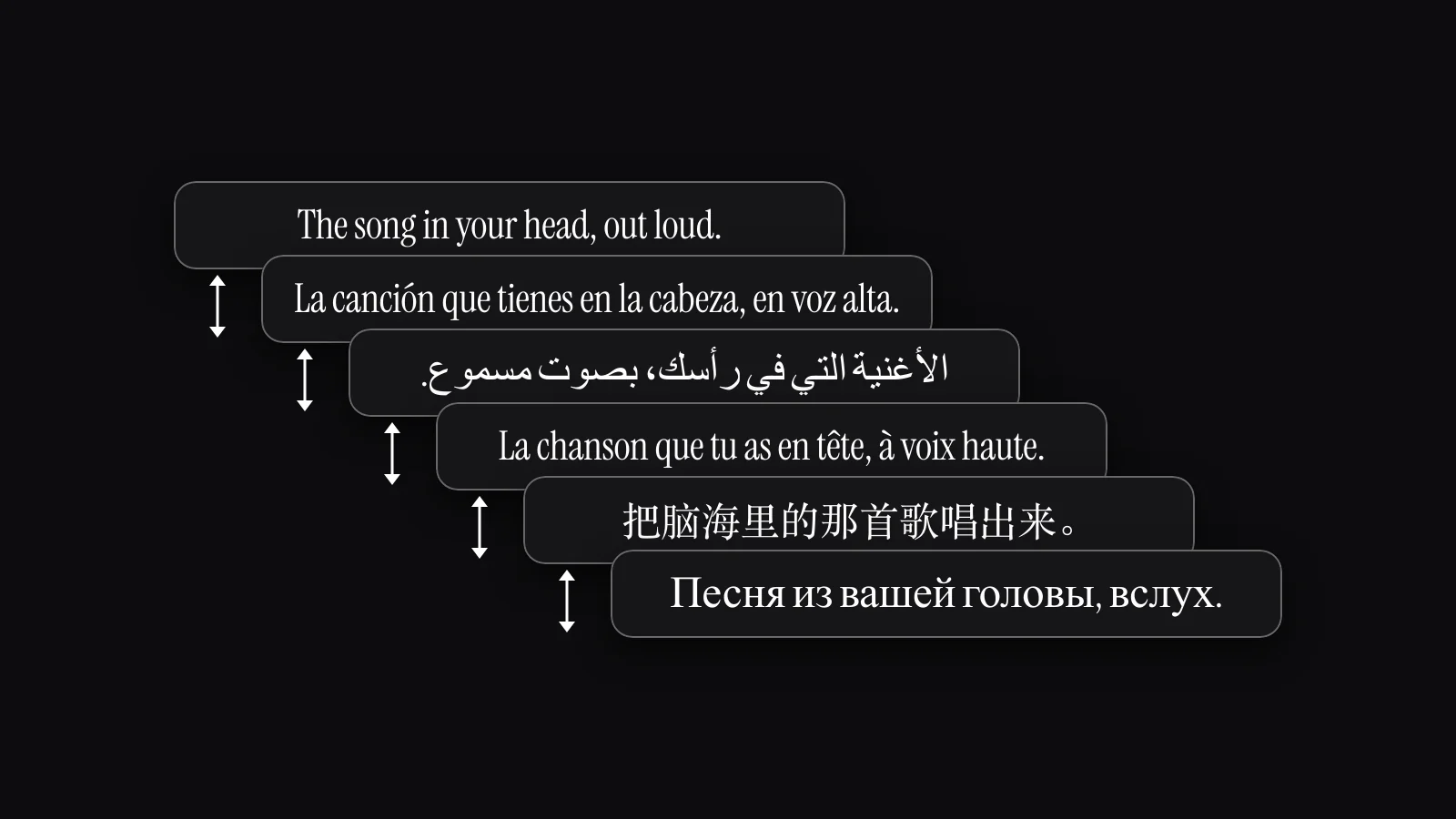
- On 19 November 2026, the web app began to show in nine more languages. Because pages are rendered on the server, a page arrives in your language from the first moment.
- Platform
Put your next idea into music.
Bring a brief, a melody or a new direction to Mozart.
Create with MozartKeep reading
Product
Mozart on the web in nine more languages, with notifications in your browser
The web app now shows in your language, with nine to choose from besides English. Notifications have also arrived on the web.
Company
An update to credits on Mozart
What is changing with credits on Mozart: new plan allowances, a clearer cost for every feature and what it means for your account.
Product
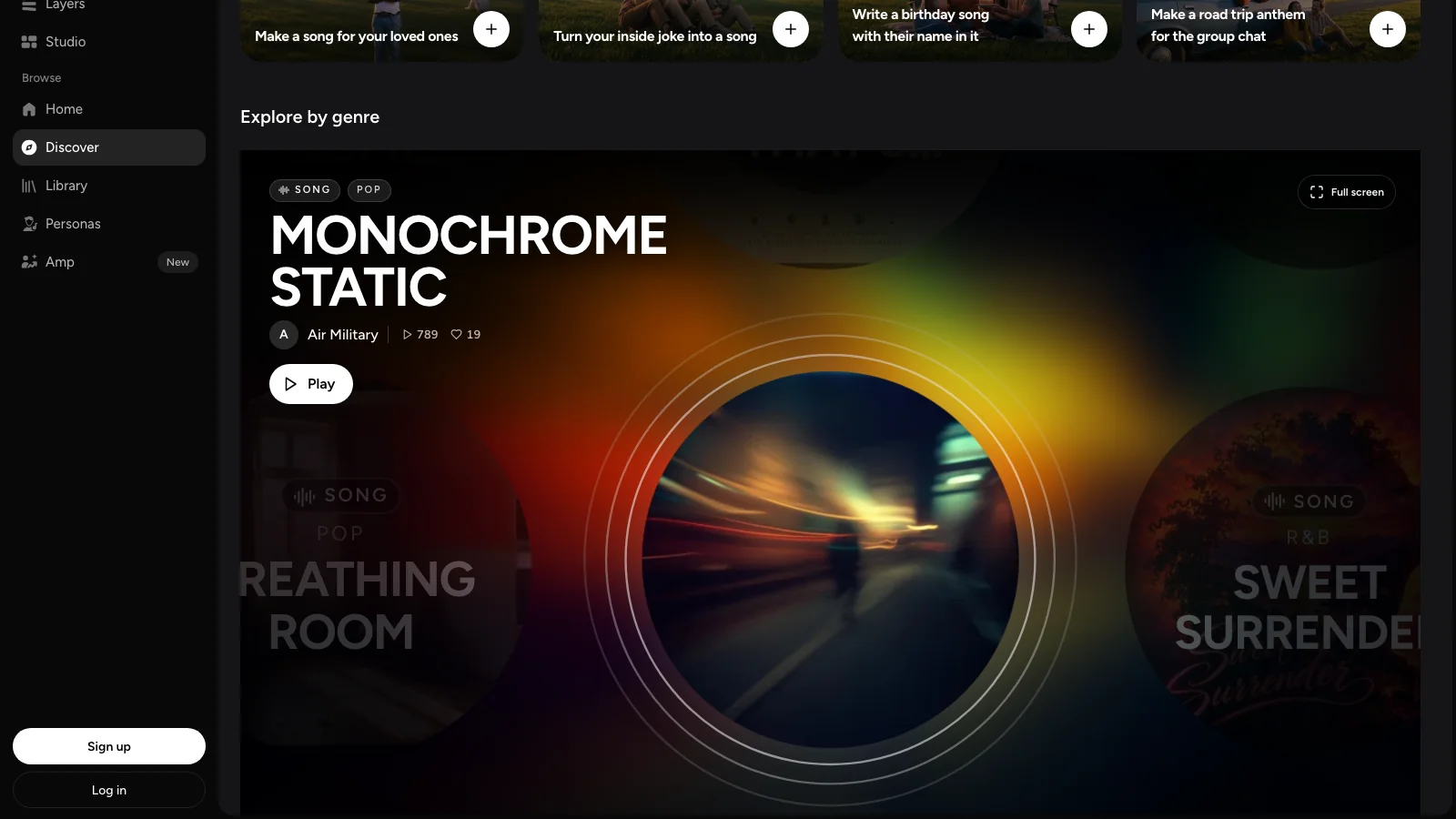
Discover is now a map: songs, albums and videos in one place
Discover is a map you pan and zoom. Songs, albums and videos sit together, laid out by genre, and landing on one plays it.